

Are Catamaran Cruises Stable for Seasickness?
Last Updated: November 9, 2026
Quick Summary
Catamaran cruises are very stable for seasickness because two hulls spread the boat's weight wide, so the vessel rocks far less than a single-hull sailboat. A survey from CNH Tours' cruise passenger comfort survey found that 92% of respondents reported being hardly or not at all bothered by seasickness on their cruise.
At Follow That Dream Sailing we sail a 41-foot Lagoon 410 S2 with a 24-foot beam that carries excellent stability .
Charter companies often steer first-time sailors toward catamarans to lower seasickness risk.
Catamaran motion is flatter and quicker, with less side-to-side roll.
Sit mid-boat on deck, watch the horizon, and get fresh air to help prevent seasickness.
Don't try motion-sickness medication for the first time as you board, since some cause drowsiness.
Worried about seasickness on the water?
We sail a stable 41-foot catamaran with a wide beam and an experienced crew.
Table of Contents
Why Catamaran Cruises Are Stable for Seasickness
Catamaran cruises are stable for seasickness because two hulls spread the boat's weight wide, so the vessel rocks far less than a single-hull sailboat. A survey from CNH Tours' cruise passenger comfort survey found that 92% of respondents reported being hardly or not at all bothered by seasickness on their cruise.
At Follow That Dream Sailing, we sail a 41-foot Lagoon 410 S2. The wide beam is key: a monohull leans hard into every wave because its weight sits in one narrow hull, while a catamaran shares that load across two, cutting the rolling motion most people blame for nausea.

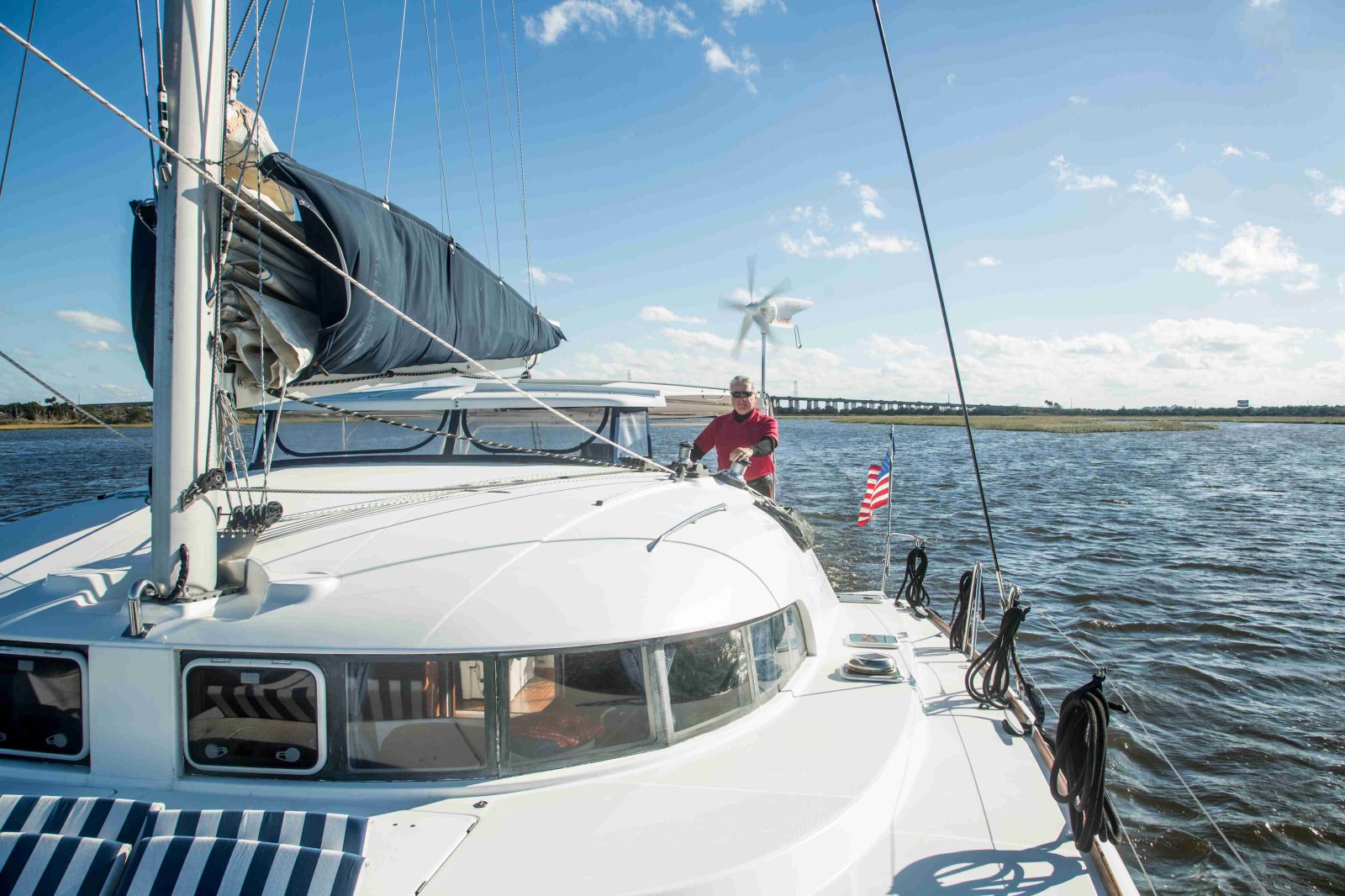
Relaxing on the wide deck of a sailing catamaran during one of our scenic cruises
Want to see the actual boat behind that stability? Explore our 41-foot Lagoon 410 catamaran.
Catamaran vs Monohull Comfort: What the Motion Feels Like
A catamaran and a monohull feel completely different underfoot, and knowing which motion bothers you matters more than any spec sheet. Boatbookings' charter guidance notes that charter companies often steer first-time sailors toward catamarans to lower seasickness risk.
Monohull motion is a slow, deep roll, soothing to some, unsettling to others. Catamaran motion is flatter and quicker: less side-to-side roll, but a sharper, shorter movement when waves hit. One source, YachtSite's comparison of catamaran and monohull motion, argues this jerky feel can trigger motion sickness in very sensitive people.
Motion Type | Monohull | Catamaran |
Side-to-side roll | Deep, slow, rhythmic | Shallow, quick |
Overall feel | One long swing | Short, flat shifts |
Best for | Settled stomachs | Most seasickness-prone guests |
Size matters too. Quasar Expeditions' guide to vessel stability points out that larger vessels ride steadier than smaller yachts because of size and displacement. A 41-foot catamaran with a 24-foot beam carries that advantage into a compact, comfortable boat.
For most guests, the catamaran wins: reduced rolling settles the stomach, and short, flat shifts are easier to ride out than a long heeling swing. If you are extremely motion-sensitive, tell us before you book.
How to Prevent Seasickness on a Boat: A Step-by-Step Plan
Eat light, stay hydrated, and rest well. Sit mid-boat on deck, watch the horizon, and get fresh air. Use medication early, ask a clinician or pharmacist about options and timing, and tell the crew if it gets bad; we adjust course, speed, and seating. Don't try motion-sickness medication for the first time as you board, since some cause drowsiness.
For a deeper walkthrough, read our guide on how to avoid seasickness on a sailing boat. Questions? Our frequently asked questions cover the details, and you can contact our crew.
Once you have a stable boat and a solid plan, the rest is easy. Browse our coastal sailing cruises and pick the outing that fits your group.
Seasickness should not keep you off the water. Follow That Dream Sailing runs stable, comfortable cruises on a 41-foot Lagoon 410 S2, with a wide beam that cuts the rolling motion most guests dread. Our experienced captain and crew watch conditions, adjust the route, and help every guest find the most comfortable spot on deck. Get started with Follow That Dream Sailing and enjoy the coastline with a settled stomach.
Frequently Asked Questions
Is it common to get seasick on a catamaran?
Most passengers report little to no seasickness on catamarans. The wide beam and twin hulls reduce rolling, though individual sensitivity and sea conditions still matter. If you are prone to motion sickness, choose a larger catamaran, stay on deck with a view of the horizon, and follow a prevention plan before you board.
What are the best tips to prevent seasickness while on a boat?
Start with rest, hydration, and a light meal before boarding. Once underway, stay on deck, keep your eyes on the horizon, and avoid below-deck spaces where motion feels stronger. Fresh air helps, and so does choosing a seat near the center of the vessel. If you use motion-sickness medication, follow the label and consult a clinician first, especially for children or anyone with a medical condition. A step-by-step plan before, during, and after the cruise works better than one single remedy.
Are there specific areas on a catamaran that are best for avoiding motion sickness?
On a 41-foot Lagoon 410 S2, the wide cockpit gives you room to spread out and keep the horizon in view.
Comments